
The Tell: Self-Handicapping and the Armor We Can't Remove
In poker, a tell is an unconscious signal that gives away your hand. Patrick's tell is when his voice drops mid-story and he reaches for the safety valve—the self-deprecating joke that kills the narrative before anyone can reject it. That tell reveals something deeper: a system built in a Midwestern house decades ago that's still running on old software, still protecting him from threats that probably aren't in the building anymore.
The Glass House: Why Visibility Isn't The Same as Being Seen
A graphic designer at a networking event asks: "Who are you to write a book? Do you have it figured out?" You give him your best diplomatic answer. Then another. You reach for every conversational tool you have. And nothing lands. Because the issue was never about credentials. It was about something no amount of honesty could touch. This is about the gap between being visible and actually being seen.
The Audit: Are You Shooting Like AI Before AI Arrived?
Paul Delaroche walked out of a room in 1839 convinced that painting was dead. He was probably wrong, but he was wrong in a way that mirrors what photographers are feeling right now. AI didn't invent average. It harvested the billions of images we posted, liked, and commented on, and showed us exactly what "quality" looks like. The question isn't whether AI can replace us. It's whether we already replaced ourselves.
Widening the Lens: The Book Is Done, the Frame Has Changed
Louis Leroy meant to end the Impressionists' careers when he weaponized their word. They took the insult and wore it forward. This is about how a podcast built to sell a book became something else entirely. How the themes underneath were never about cameras. And why the frame—and the name—had to change to hold what the show had actually become.
Cosmic Cruelty: When Bad Luck Feels Like Punishment
There's a show called Alone where people starve in the wilderness on camera. But the people who quit between day 30-45 rarely quit from cold or hunger. They quit because they lose the psychological thread. They can't answer why they're still doing it. This is about the invisible weather of freelancing and the specific loneliness of standing in a storm nobody else can witness.
Why Freelancing Has No Floor: The Cliff Between Freedom and Survival
There's no manager to tell you you're doing a good job. No HR department to refill the coffee. There's just you, the silence after the work, and the weight of not knowing if the silence means rest or rejection. This episode explores what actually keeps creatives standing when the ground won't show up.
The Mask: When Professional Competence Becomes Your Prison
The Romans knew that a mask wasn't designed to hide the man—it was engineered to amplify him. But there's a price for being a perfect vessel. This episode explores how the professional persona you build over years becomes so integral to how you exist that the person underneath stops raising their hand. And what it takes to find the gap where you can actually breathe.
The Hyde: Power, Permission, and the Camera as Weapon
The camera doesn't make a man a predator. But if there's already something in you that craves power over vulnerability, the camera is a very polite way to let that shadow breathe. This episode dissects the four tiers of abuse in photography, from the amateur using the camera for access to the professional using it to normalize predatory behavior. It's uncomfortable, personal, and necessary.
Instagram Killed Still Photography—And We Let It
Instagram was built by photographers for photographers. Then it systematically killed the still image to compete with TikTok. We became sharecroppers on rented land, optimizing for algorithms that told us everything we learned was wrong. This is the story of how a platform murdered the medium it created—and why that might be our best chance at finding authentic photography again.
The Dangerous Creative: How Solving Problems Threatens Systems
The most dangerous person in any system isn't the loudest rebel—it's the quiet problem-solver who proves simple solutions work better than expensive complexity. Atul Gawande created a checklist for surgeons and threatened an entire medical establishment. You're doing the same thing in your field, and institutions are fighting back. This episode explores pattern recognition, intervention points, and the uncomfortable cost of being right when everyone else is invested in staying broken.
The Oracle: Why Gear Influencers Are Modern Televangelists
It's 3 AM. Peter Popoff promises divine financial miracles for a donation. Skip forward to 2026: YouTube thumbnails promise "THIS CAMERA CHANGED EVERYTHING." Same hustle, different spring water, better production value. In this 50th episode, Patrick reveals how gear culture has created a liturgy of inadequacy that never lets you feel like enough, and why younger photographers are building influencer careers instead of photography careers.
Why Your Camera Brand Doesn't Care If You're Talented
George Eastman promised "You press the button. We do the rest." Over a century later, camera companies promise the same lie: ownership equals mastery. Bill shows up to Patrick's workshop with the same R5, fresh from the box. And Patrick feels cheated—not because Bill doesn't deserve it, but because Patrick realized the gate he'd been protecting didn't exist. The camera you own doesn't prove you're legitimate. What you do with it does. But camera companies profit from you feeling not yet enough.
Editing Is Violence: The Courage to Choose
You shoot 1,200 images. Editing down to 17 you love. Which one matters? Great images don't need context. They don't apologize. They carry weight alone. But most photographers can't commit. They keep safety shots, near-misses, frame that's almost as good as the great one—just in case. That hesitation is the enemy. Great images don't hedge. If you can't commit to your own edit, no one else will.
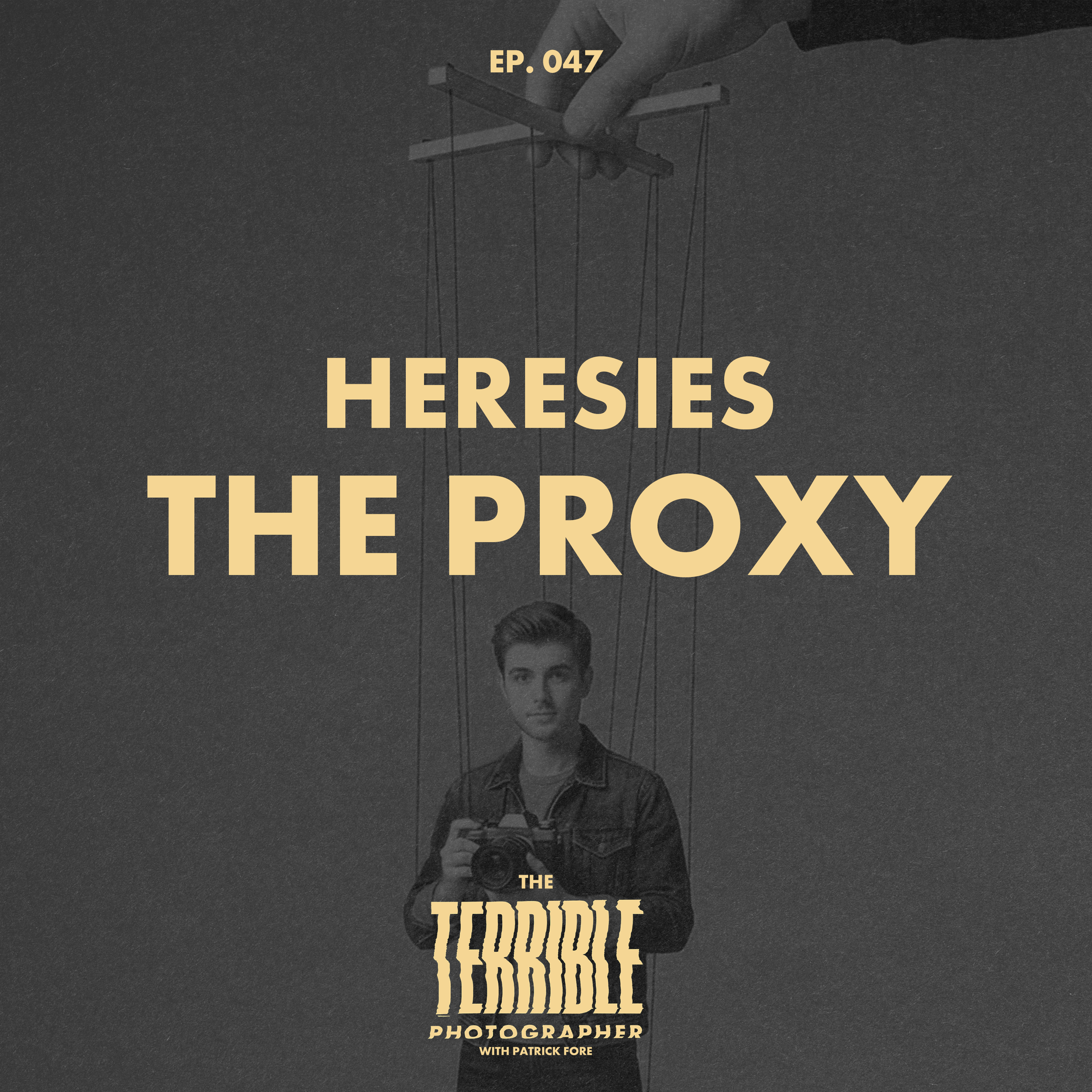
The Proxy: Why Listening to Clients Can Kill Your Work
Peyton sent a Pinterest board of aspirational, stock-photo wellness imagery. What she actually needed wasn't that image—it was to feel understood. Patrick's job wasn't to execute her vision. It was to translate what she was actually trying to say into something visual that worked. But most photographers are proxies—empty vessels executing other people's ideas without the courage to suggest a better path.
Amateur vs. Professional: Transactional Legitimacy
Jason sends Patrick a voicemail: "We're terrible photographers too. And I think we have lots to give." That sentence wakes something up. Because amateurs—people who make extraordinary work and stop, who shoot purely for the image—they have immunity professionals lost. Immunity to algorithms, trends, client feedback, pricing anxiety. They have a practice instead of a career. In this episode, Patrick admits his envy, explains transactional legitimacy, and asks: what did you trade away to get paid?
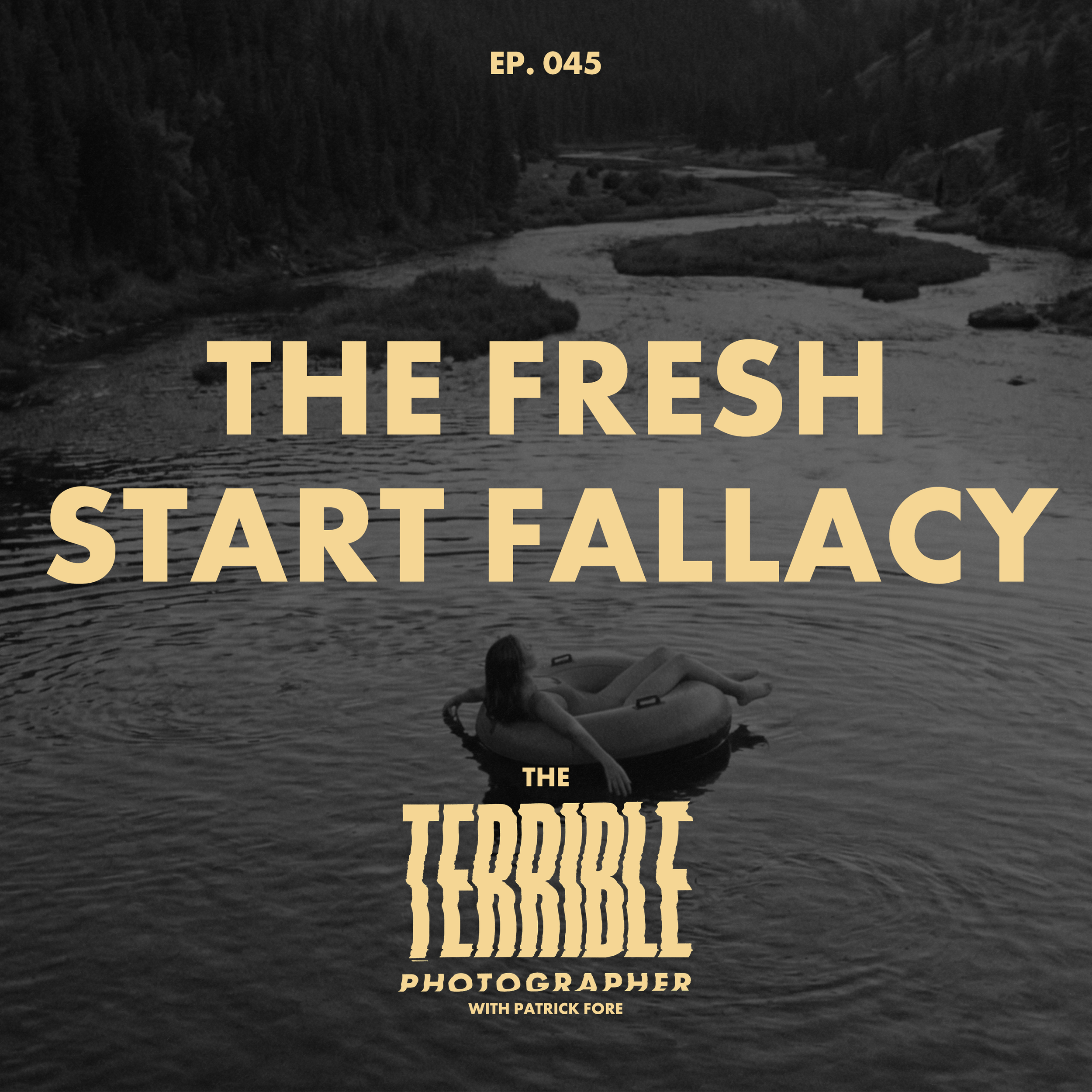
The Fresh Start Fallacy: Breaking 300 Years of Patterns
The Fore family name used to be Fauer—probably meant fire or forge. For three centuries, Patrick's ancestors have been laborers, farmers, tradesmen. None of them built anything that lasted. None of them owned anything. They floated. Now Patrick is angry—at them for not trying, at himself for having privilege they never did, at a system designed to keep working people exactly where they are. The Fresh Start Fallacy says January can fix this. It can't. But understanding the river you're floating in is the first step to swimming out.
The Third Space: Building Community Without Permission
The Third Space—the pub, the coffee shop, the place where no one's in charge—doesn't exist anymore. COVID killed it. WFH collapsed first and second spaces into one room. Social media promised community but delivered performance stages. Now we're lonely despite being connected. In this finale of The Long Middle series, Patrick maps what's missing and shows the only real solution: you have to start. You have to reach out to one person and show up without your costume.
Gatekeeping in Photography: The Enemy Within
Gatekeeping isn't about standards. It's about control of access. In Episode 43, Patrick exposes the gatekeeping systems in photography—where you're told Profoto is "professional" and Godox isn't, where wedding photographers apologize for their work, where your path matters more than your results. But here's the heresy: the gatekeepers are terrified too. They're enforcing the hierarchy that hurt them because being in the middle is safer than standing up.
Framing Isn't Composition: Authority in Photography
Composition is where the chair goes. Framing is who gets to sit in it. In this bonus episode, Patrick deconstructs the difference between technical choices and authorship. When photographers frame for comfort instead of truth—when they flatten power, erase texture, and make everything beige—they're not solving problems. They're abdicating responsibility. The cure? Remember that framing is a decision about what deserves to be seen and how.
Why Photographers Hide: The Costume
Photographers dress in black to become invisible stagehands instead of artists. In Episode 41, Patrick explores why we hide behind professional roles, wear costumes to protect ourselves, and how this armor keeps us isolated. The invitation: drop the shield and risk being seen as yourself. Because community requires vulnerability, not performance.